

Why We Avoid What Hurts Us
The human brain has a simple operating preference.
Seek pleasure.
Avoid pain.
Conserve energy.
When a thought comes up about something we have done that causes discomfort, shame, or regret, the instinct is automatic.
I do not want to think about that.
I do not want to talk about that.
I will deal with it later.
So we leave it alone.
The problem is that unresolved shame does not go away just because we avoid it. It stays active in the background, influencing thoughts, emotions, decisions, and behavior.
Left alone, it becomes destructive.
The Weight We Carry Is Meaning, Not the Event
Most people describe unresolved shame as a weight.
That weight does not come from what happened.
It comes from what we made it mean.
We all do things we regret. Some of us have done things that caused real pain to others. Some of us have done things that feel impossible to reconcile with who we believe we are.
The brain often jumps to a dangerous conclusion.
Because I did this, something is wrong with me.
Because I regret this, I must be defective.
Because I crossed my own values, I must be broken.
That meaning becomes the weight.
My Story and Why This Matters
I am not speaking from theory.
I spent over twenty years living with unresolved shame. I made the things I had done mean that something was permanently wrong with me. I tried to work myself to death to prove I had value and drink myself numb to escape what I felt about myself.
This was not a conscious plan. It was the result of beliefs operating in the background.
The impact was devastating.
My life suffered. Relationships suffered. People around me suffered. And it continued as long as the belief remained unresolved.
I share this not for sympathy, but as a warning.
If you leave this alone, it will affect your life. And it will affect the lives of the people around you.
Acceptance Is Not Justification
This matters.
Accepting yourself and forgiving yourself does not excuse behavior. It does not justify wrongdoing. It does not remove responsibility. It does not eliminate consequences.
Behavior still matters.
What acceptance does is separate what you did from who you are.
We are responsible for our actions. We are not required to destroy ourselves because of them.
Why Shame Feels Logical and Why It Is Not
When you do something that goes against your values, the brain struggles to make sense of it.
I believe lying is wrong.
I lied.
Something must be wrong with me.
That conclusion feels logical in the moment. But it is incomplete.
Human beings do things that go against their values. That is part of being human, not proof of deficiency.
The mistake is using behavior as a verdict on value.
A Foundational Truth to Consider
Here is a belief that changed everything for me.
There are no bad people.
That includes you.
Human beings are imperfect people doing imperfect things. That does not make behavior acceptable. It does mean value remains intact.
Your value is non-negotiable.
Not because you decided it.
Not because you earned it.
Because you exist.
A Practical Way to Resolve Shame
Resolving shame requires intention. It does not happen by accident.
Here is a simple framework I teach and live by.
Step One Recognize and Reach Out
Learn to recognize when you are experiencing shame.
Notice the physical sensations.
Notice the emotional signals.
Notice the thoughts attached to it.
Then reach out to someone you trust.
Shame loses power when it is spoken in a safe place. Connection weakens its grip.
Step Two Make Amends Where Possible
Some things can be repaired. Some cannot.
Do what is within your power to make things right. Apologize. Restore. Take responsibility.
Then stop punishing yourself beyond that point.
Step Three Choose a Next Time Strategy
Decide how you will handle a similar situation differently in the future.
Clarity replaces confusion when intention is established.
Step Four Connect the Event to a Core Value
Find at least one value connected to what happened.
This does not excuse the behavior. It explains the human reason behind it.
When the brain understands the value beneath the mistake, it stops defaulting to self-condemnation.
Forgiveness Is a Practice, Not a Moment
Self-forgiveness is not a one time event.
It is a habit.
Each time the memory comes up, you reframe it.
Each time the shame appears, you respond differently.
Over time, the weight lifts.
How Self-Acceptance Changes the Way You See Others
As you learn to see yourself as an imperfect, valuable human being, something changes.
You begin to see others the same way.
More patience.
More understanding.
Less judgment.
This is not weakness. It is clarity.
Look at Yourself the Way You Look at Those You Love
Think about someone you love deeply.
If they made a mistake, would you condemn them for life?
Would you define their entire worth by that moment?
Of course not.
Extend the same standard to yourself.
A Final Truth to Hold Onto
Separate what you have done from who you are.
You are 100 percent as you are.
Not by decision.
By design.
Regardless of what you have done.
Regardless of what you have not done.
Regardless of what has been done to you.
Your value is non-negotiable.
FREE RESOURCE


Want stronger, closer relationships with your kids, your spouse, and everyone who matters most?
You deserve it. And you can!
Sign up for weekly tools to communicate better, connect deeper, and create more trust and love in every relationship.
Your guide to understanding yourself and the people you love on a whole new level.
Sign up here:
Thank you! Your submission has been received!
Oops! Something went wrong while submitting the form.

FREE RESOURCE
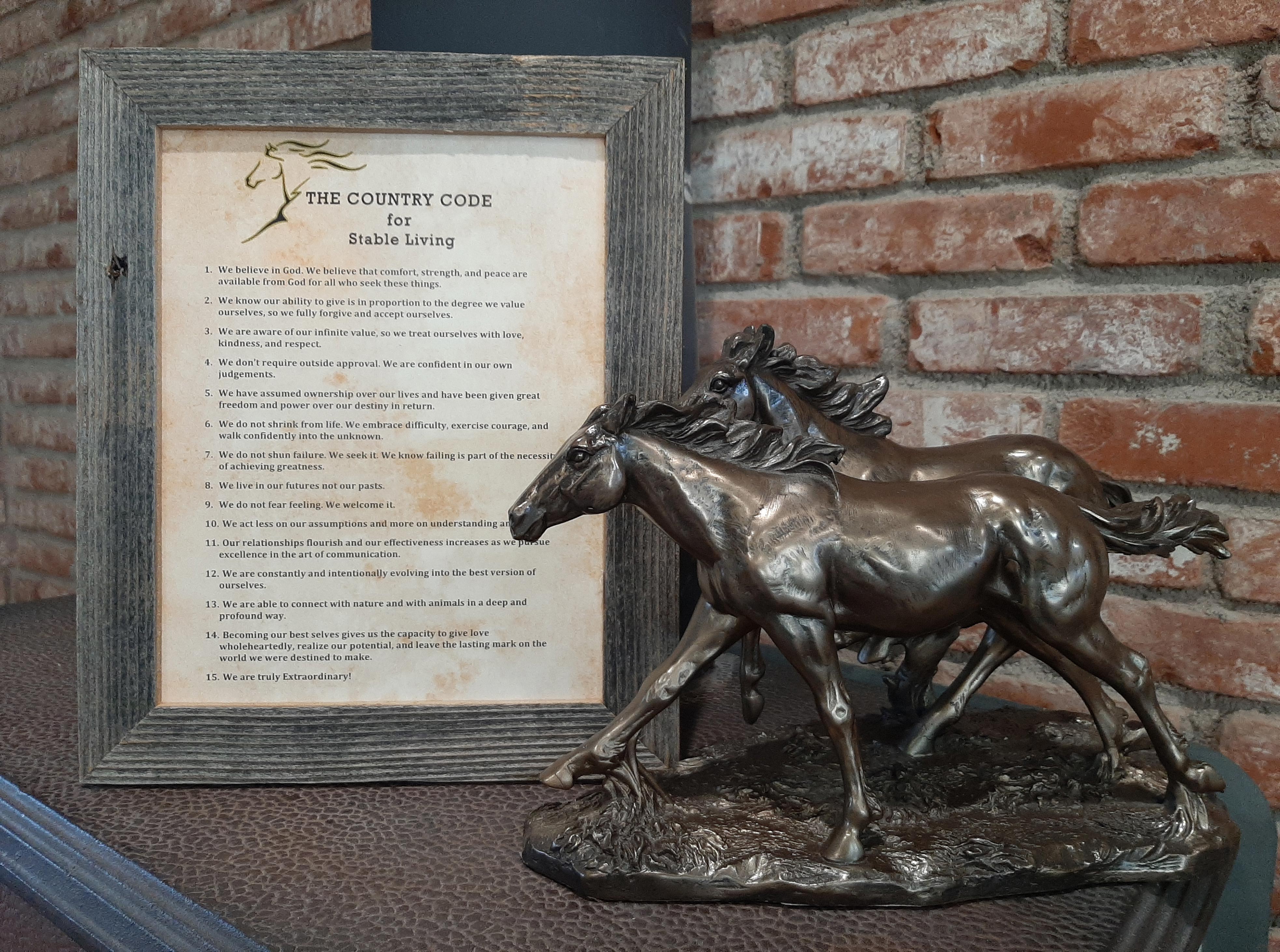
The Country Code for Stable Living:
The Country Code is words to live by. It’s what we stand for. It’s yours free to display and read for inspiration, motivation, and hope when you’re feeling down.
Print it. Frame it. Live It. Love It.
Live by the Country Code.
It’s time to Thrive!
Enter your info below to get a free printable, frameable Country Code
Print it. Frame it. Live It. Love It.
Live by the Country Code.
It’s time to Thrive!
Enter your info below to get a free printable, frameable Country Code
Thank you! Your submission has been received!
Oops! Something went wrong while submitting the form.