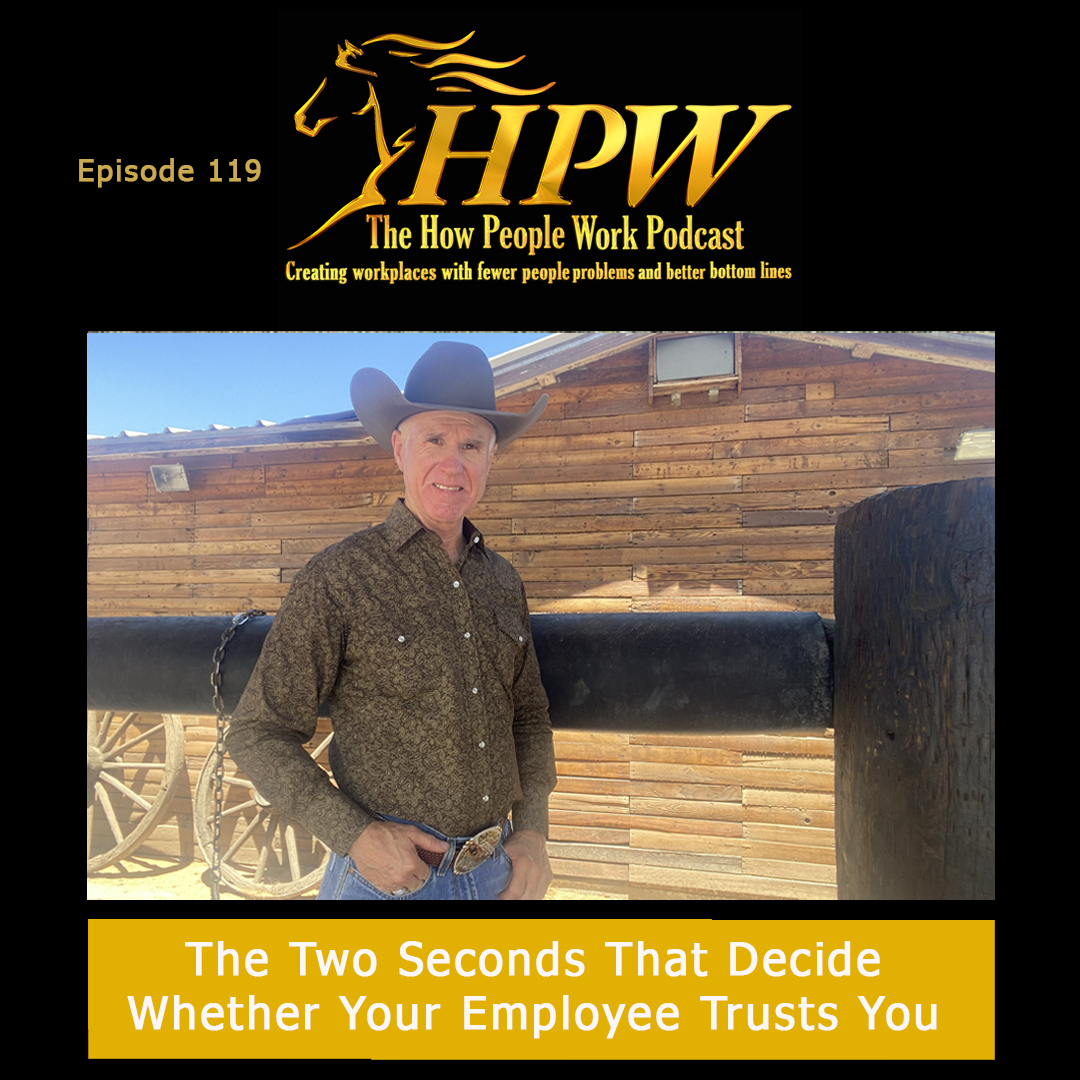
In this episode, Shane shares the belief that changed his life: behavior and identity are not the same thing. When we confuse the two, shame quietly drives our decisions, damages relationships, and keeps us stuck. You will learn how separating what you do from who you are leads to clarity, responsibility, stronger leadership, and real emotional self-reliance.
What you will discover:
• What your brain automatically does after you regret something
• The difference between taking responsibility and attacking yourself
• Why emotional self-reliance begins with one powerful belief

Ladies and gentlemen, welcome to this episode of the Stable Living Podcast. My name is Shane Jacob, your host, and I thank you for taking your time to be here with me today.
Today I've got a, we're going to have a good topic today and a good discussion. And I think this is a big one, and I think it's going to make a difference in your life. Matter of fact, I guarantee you it will if you stay with me on this. Okay.
I'm going to give you a belief. Okay, that I have adopted, that I believe. I'm going to give you a thought that I guarantee if you develop this thought into your own belief, you'll have a better life. Okay, I'm just telling you right now. Even if you already have the belief, if you continue to evolve that belief. If you continue to improve and strengthen and more internalize this belief, you're going to have a better life.
And so hopefully what I'm going to talk about is going to be helpful in you in that process so that you have a better life. Okay. Cause that's what I'm here for.
And what I'm going to talk about is separating your behavior from your person, from the individual. Behavior, individual, two separate things, not the same. Okay.
And I'm going to tell you a quick story about that, I tell about how I learned about this process.
Um, I pulled into, I pulled into the barn one day, put the truck in park, cracked the window. I could, uh, I could smell the fresh hay and the horse manure. My favorite combination of smells.
I reached in the back seat and pulled out another beer. I didn't want to think about what I had done. I didn't want to think about who knew about it. I didn't want to think about what they thought about me if they knew about it. I was tired of pretending it didn't matter. And so I just kept reaching for another beer because the alcohol seemed to help. As a matter of fact, I'd been reaching for another beer for 21 years.
I saw Rick over there by the arena, and Rick's a big guy, six foot two, tall big black cowboy hat, and the look on his face, it just always says all business, man.
And I saw him over there, and I thought, man, he's going to make me ride that damn horse he calls Dan, that belligerent son of a gun. He was teaching me to train horses, and I thought, well, I hope he doesn't make me ride Dan today.
And I walked over, and he was laying next to Jesse. He was kneeling. Rick was kneeling next to Jesse.
Now, Jesse, now that's another matter. Okay. This is an outstanding individual, the kind that you don't just walk past. You stop and admire. Jesse had red hair, blonde highlights, and confirmation that horsemen appreciate.
Anyways, kneeling next to Jesse, jumped up and said, “I've got to get her to Dr. Huff right away. Will you drive?”
And I was like, “Mm-hmm.”
So 20 minutes later, we're at the vet clinic.
And Dr. Huff went about doing his diagnosis, and pretty soon he stopped. And he looked at Rick, and he said, “Rick, I've got bad news. Her stomach is ruptured. She's in septic shock, and it's irreparable. I'm sorry.”
And Rick didn't say anything for a minute.
So Dr. Huff went over and he started filling his syringes full of the blue juice. We knew what the blue juice was, euthanasia.
Finally, Rick said something. He said, “We've come too far together. I need to be the one to give him the shot.”
And he did.
Before too long, we were headed home, just the two of us. And we were going along in the dark and in the silence, and it was quiet for a long time.
I wanted to say something helpful. I wanted him to say something.
Finally, I said something. I said, “I wish it would have been Dan instead. It wouldn't have been such a big deal.”
He looked over and said, “I don't.”
I said, “Are you serious? You wouldn't have rather have been that unwilling coyote bait, Dan? You risk your life every time you get on him.”
“Nope.”
I’m like, “How does that even make sense? How can that be, Rick? What do you mean?”
And he looked over me and he said, “Shane, I don't value horses based on what they do and don't do.”
And I thought, “Huh? You don't value horses based on what they do or don't do, really?”
I said, “Well, if a horse isn't what he does, Rick, what is he?”
And he looked back at me, and this is what he said.
He said, “I'll tell ya. A horse is a priceless individual. They're priceless individuals who sometimes behave well and sometimes they don't, but their value is non-negotiable. Think it over.”
And I did. I thought it over. And then it hit me. That's when it hit me. That, I felt like I'd been kicked by a horse in that moment.
But I realized that what people do, what horses do, what individuals do and who they are are two separate things.
And I'd been making what I had done affect the other part of it, making it mean something about me.
And the thought that I had that what I had done meant something about the kind of person I was, meant something about my worth, was the belief that I had that had been slowly deteriorating all of my life.
Because when I pulled up to the barn that day, my marriage, my business, and my health were just about this far from imploding.
And I thought that over, your value is non-negotiable. Regardless of what you've done or not done, your value is non-negotiable.
And I got out of that truck that night a little bit different than I had got in. You know, and it, let me just tell you this, the thing that I had done, it didn't make it better. And it didn't make it, it didn't change it. It didn't heal it. It didn't solve the suffering.
It didn't save my marriage, and Dan still wasn't easy to ride.
But when I knew that what we do doesn't affect our worth, I started looking at human beings and horses differently. I could accept what people, I could accept and respect and even love people as they are, even Dan and even me.
And I thought back to what Rick said, “I'll tell ya.” He said, “I'll tell ya. Horses are priceless individuals who sometimes behave well and sometimes don't, but their value is non-negotiable. Think it over.”
And I'm asking you to consider thinking it over.
Okay. This is when I first learned about this idea, so I'm talk a little bit more about it. If you accept this idea, what you're gonna do is you're gonna have more clarity, more understanding, and your life will make a little bit more sense. As you start to recognize more about your thinking, that's affecting your life.
And what I'm going to be talking about is, what I am talking about right here right now is regret, shame, things that we've done that we don't like to talk about. That's one of the ways we can recognize regret, okay?
And we can recognize shame if it's something that we don't want to talk about. We want to hide it. We're worried about what other people will think or say about it so we keep it to ourselves. Embarrassment, big embarrassment.
Okay, not all embarrassment, but embarrassment a lot of times, okay?
What we think other people think about us, okay, based on what we've done and what other people have done to us.
This is a big one because some of us have experienced traumas of different varying degrees, different kinds of trauma. We can be upset or disturbed by how people have treated us, about what people have said to us, all different kinds of things of what people have done to us and what we think that means about us.
Now, if we're upset or if it feels bad to think about, that's a sign, that's how we know, it's a good sign that we could be in shame.
So what's happening with this thing that we call shame is, is now this is whether you're aware of it or not. I'm going to tell you what's happening behind the scenes in your brain.
What's happening is, is that our brains are beautiful, magnificent brains are making a thing, means a thing that we did, a situation, a circumstance that where we did a thing or something happened to us, we're making meaning about that, that means something about ourselves. Okay?
And in shame, what we're making it mean is, is because of what we've done or because of what something has been done to us, then we're less than somehow. We're defective, we're deficient, something's wrong with us. Because why else have we have done that? Okay? We don't know.
Most people don't know because we haven't been taught how to manage our minds around this. Okay. We haven't been taught how to think about the things that we do or that are done to us that are against our values, that are against our values. Okay. That's where this principle comes in.
So when you go and do something, okay, and sometimes you will, you're going to, you're going to, we're all going to experience shame.
So when you go and do something that it's against your values or somebody does something to you that you judge to be wrong It's against your values your mind automatically goes. Hey, what's going on here? What's going on here? We need to make some sense out of this and so they start assigning judgment about the human being based on what happened. Okay, our minds naturally automatically need a way to explain why everything happens.
So when something that that is against what we believe is right or is just, just like is injustice. If something is against, is injust or something that we judged is wrong, okay, then our brain is confused. It says, “Why did this happen? What does it mean?” And our brain needs a resolution.
So our brain decides something is wrong with us a lot of the time.
For example, in my story, what happened to me was that I did something that was a big thing. It wasn't like I told a little lie that didn't have a big consequence. This is a serious big thing that I had done. I didn't intentionally set out to harm people, but I ended up harming people, okay? I ended up harming people in ways that couldn't be repaired.
And I didn't know what to think about that. I know that I had regret, I had remorse, I had sorrow, I had guilt. I had a lot of feelings around this. I wanted to rewind time. I didn't want it to happen. I didn't intend to hurt people and I felt bad that I had injured and caused people to suffer.
Cause that's not what I wanted to do. That's against my values. And I didn't know what, but I had, I had done it, but I didn't know what to think that meant about me.
So I, the only thing I could come up with without having a skill or a way to manage my mind around this was that something was wrong with me because I had done this thing big time.
So I decided the best way to deal. I didn't like the idea that something's wrong with me, but I mean, I've done this thing. so how else are you going to explain it?
So then I started doing things that perpetuated the problem. The problem was that I was drinking. Okay. The big thing happened when I got in a crash when I was drinking. So I started drinking more and then I, my life started to deteriorate over time, and it had a negative impact on my life for over 20 years, over 20 years. Damaged relationships, damaged, I mean, it was bad news.
That was only the thing that happened that I was so ashamed of was only the beginning of the suffering. So many more people suffered as a result of what my thinking about it. Okay.
And so when we do something and you can look at, just think of something simple. If you can't, I hope you don't have anything as big and egregious of what I did, you can think of something because it happens almost every day.
“I can't believe I did that. The hell's the matter with me?”
Right there. Okay. That's the thought. What the hell's the matter with you? Your brain is answering behind the scenes saying, “Here's what's wrong with you. You're messed up. Period.”
And so when you begin to think this way, you actually are, you get to be messed up. Okay. So that's what happens.
You're defective, you're deficient, something's wrong with you, and then something is wrong with you because that's the way the thoughts drive our results in our lifetime.
So it could be something small, and this little thought process happens all day as we go around throughout life.
The question is, what are we doing with the things that we regret, that we're ashamed of that we feel guilty for that we wish didn't happen that we have that we're ashamed of that and that other people do to us?
What are we doing with those things that other people do to us? Somebody said something and I judge that to be wrong, to be rude, to be disrespectful, to be blah, blah, blah. Whatever the thing is, I judge it to be that way. Why did you do that? I make it mean something about me. Same story. Okay.
Whether somebody else did it or me, to me, it seems it's the same, it's the same response.
Your default, if you don't learn this skill of what I'm talking about, your default is going to go to something that's matter with you. You are defective somehow because of this stuff that's happening in your world that's against your values, whether it's somebody else or you.
This is a big thing. I need you to just be with me in this for a minute. Okay?
The thought is the problem, not what they did, not even what you did.
And I'm not saying it's okay and it's not a problem because of what you did, because what I did is a problem. There's no getting around that. Okay?
The thing may or may not be the problem. What you want to do is not continue to perpetuate another problem or a bigger problem because of it.
This is where all the negative behavior comes from. It's the things that we make, what we make things mean about ourselves. And that's like I described to you as what happened to me.
Now, it doesn't happen, it doesn't need to be like that. Okay? This is a choice that when you learn this skill and if you develop this thought process, this belief system for yourself, you don't need to suffer nearly as much as you are.
Now you might not think you're suffering, but if you turn this around, you'll be surprised at how your life slowly starts to, not slowly, how much progress you're going to make and how much your life is going to be a different place and it's going to be a better place.
Stay with me here. You don't need to suffer, make other people suffer at all.
The concept or the belief begins with separating what people do. This is called behavior and the individual or the person. Two separate, totally separate things. Okay?
Just like Rick said about horses, we are like they are, priceless individuals that sometimes behave well and sometimes don't.
But whether this value, this behavior over here is good or bad, the value of the soul, of the person, of the individual is non-negotiable. It is not affected. Okay?
And we're going to talk about this behavior over here in a minute. But the value of the person is never up for negotiation. No matter what. No matter what you do or don't do, or what happens to you, or what people do to you, or what you don't do.
None of that matters to your value before God, if you ask me, before God and before the world and before the universe. Nothing is ever gonna change your value as a human being.
What usually happens when you try to separate the value is that your brain automatically starts to argue with you because you've thought the same way for so long.
It's easy just to think, you know, that's the way it is. That's the way I am. And this means that. And so that's why I did it. And I'm, you know, that's the way I am and whatever.
And you can live with that. Okay. But you don't have to. And there's a better way. Okay.
So your brain's going to argue with you. just, just know that that's going to happen in advance. So that way you'll be ready for it. Okay. Because your brain can't see that this is consistent with your values.
So what I mean by that is, your brain might say to yourself, “What you did is wrong. How can you still be 100% valuable over here? Because something happened over here against your values. This is wrong. And it sounds to me like,” and this is your brain talking, “it sounds to me like, Shane, what you're doing over here is you're making excuses, you're trying to justify your bad behavior, you're shirking the responsibilities, or you're saying in effect that what you've done is okay and it's not okay. I'm judging it to be not okay, so how can you be okay if it's not okay?”
And I'm here to tell you they're two separate things, okay?
And just let me say this, I thought that for so long. I said to myself, if I did something wrong, I have to be wrong. That's just the way it is.
There has to be a price to pay for it. There's got to be justice. I did something wrong. I am wrong. That's got to be the way that it is. Okay.
But remember my story. More people suffered because of that thought. Okay. More people than the initial. And so that's what happens. And this is an example of what's happening in everyone's life right now, depending on where you're at in this.
So separating the two actually leads to you doing less behavior against your values. Okay.
Now, just let me say this, just because you're separating, it doesn't mean that all this stuff's okay. It doesn't mean that it's okay. It doesn't mean that it's justified. It doesn't mean that it's an excuse for it. It doesn't mean that you're not responsible. It doesn't mean that you need to fix it. It doesn't mean that it's okay that you want to just keep doing it. It doesn't mean that you want to have a next time plan. It doesn't mean that you don't want to make, go back and make restitution to try to heal it and make it well and, and, do everything within your power to, to, to solve, to make well what you have damaged. Okay.
If I steal $5, I want to give back at least $5. That's an example of making it well.
The point is, here's my example. If I steal $5 and I separate the two and I say, I'm still okay, but I stole $5, but I'm still 100%, that doesn't mean that it's okay to steal $5. I need to go repay this $5. If I don't want to be a thief, I need to stop doing this kind of behavior. And I need to apologize and I need to make it well and I need to decide what I want to do in the future. But it doesn't damage me the fact that I did it. That's the point. Okay?
I'm still a hundred percent no matter what. And if that mindset is what's going to help you make things well, it's going to, and it also, it's going to put you on a track on a, on a course, on a trajectory to do less things that are against your values.
Because of your thought process about them. It actually, you're okay because you did something. You don't have to hide in shame and be disgusted with yourself and do a bunch of bad behavior and make it worse and feed this thought that you're damaged goods, okay?
So I'm not talking about any justification. So I just wanna say that, to be really clear about that.
There's so many positive effects that come from this belief. There's so many positive effects that come from this belief that you can choose to believe.
You can choose to believe that no matter what you do or don't do or what happens, what somebody else does or doesn't do to you does not affect your perfect value as a human being. You can choose it.
You can say they're two separate things right now and you can work on internalizing it and believing it and saying it again and again until you fully internalize it as part of your belief system of who you are.
And let me tell you something, it's not just going to, you're going to be the biggest recipient of the goodness, of the positive outcomes, but let me just tell you, everyone within your influence is going to be affected by this belief system, okay?
By the separation of behavior and the individual, okay? It's that simple.
You are going to be, you know what, one of the, one of the many effects, the positive effects of adopting this belief and the better that you become at the separation, okay, the more you become more self-reliant.
When I talk about self-reliant, I mean you're less dependent on other people for your emotional and your mental well-being, okay?
You become a better leader, a better manager, and a better employee, a better parent, and a better human being because you, you don't rely on what you do or don't do and you don't rely on what other people do or don't do to you. You don't have to have their approval, and their disapproval doesn't destroy you. You are more emotionally self-reliant.
And I deal a lot with self-reliance in the workplace. And what I mean by that is, is the more that we come to improve the beliefs about ourselves, the more self-reliant we become and the more self-reliant in the workplace.
We need less human resource people looking over our shoulder and managing all of our people problems. Where we can actually show up at work and be more productive, more efficient, more effective because we don't have all this underlying stuff, I'll call it, going on inside in the background in our head. Okay?
Remember my friends, I'm just going to say it one more time. I'm going to give you Rick's line again. Okay?
The last thing he said to me that night in that truck was, “I'll tell you, Shane, there are priceless individuals who sometimes behave well sometimes don't, but their value is non-negotiable. Just think it over.”
I would ask you to consider adopting the belief that your value is non-negotiable and that regardless of what you do or don't do or what is done to you, nothing can change that fact that you are 100% invaluable no matter what you do.
And the thought process of separating behavior from yourself.
And by the way, I will tell you this, the more that you adopt that for yourself, the more that you begin to see the world that way. And you know what happens? It's pretty magical. You can accept people easier because you look at them as perfect souls like you look at yourself because we relate to the world the way we relate to ourselves. You look at them, you see, “Look at your perfect self doing that thing. I don't agree with it bothers me. We need to solve this thing, but I love you anyway.”
You think I'm to get better results than sitting over here judging, telling you what kind of a person you are because of the thing that you've done?
I mean, I'm putting, you put yourself in a position to be able to have less conflict, more unity, more understanding and more progress. I mean there is, I can't, I just don't see the downside. I mean there's not a downside to separating behavior from the individual and to and to also believing that that value cannot be, it's not, it's a hundred percent regardless. It's not even, it's non-negotiable, it's just there because of the fact that you're born. It's already that way, I'm just asking you to consider fully accepting the idea and knowing it. Okay?
Your value is non-negotiable. Stay with me.


You deserve it. And you can!
Sign up for weekly tools to communicate better, connect deeper, and create more trust and love in every relationship.
Your guide to understanding yourself and the people you love on a whole new level.
Sign up here:


.png)