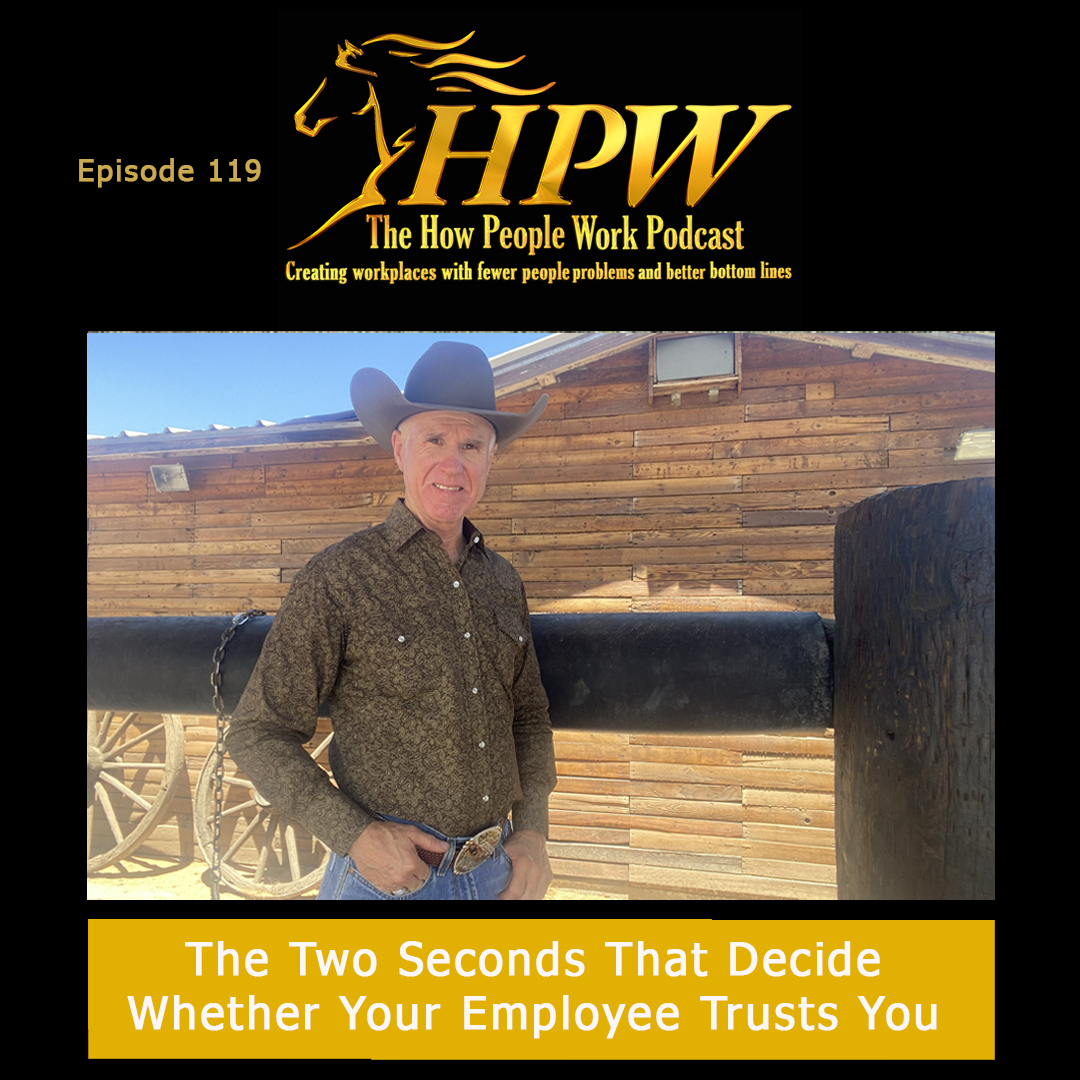
Today I want to give you some context about where I'm coming from. My podcast, weekly video, book The One-Horse Race, speaking, and training are based on my experience. Like you, I have a unique experience. There are three parts of my experience I want to talk about today and how they influence what I teach.
Part of my experience includes spending time in prison. For nearly 30 years, I never talked about it. I purposely hid it from the world. Today I don't hide it. My experience in prison, the decisions that got me there, and everything that happened during that period are part of who I am.
I've trained horses for thirty years, not as a full-time horse trainer, but I've trained professionally. I've been paid to train horses, and I currently am, my own and for other people right now. I've also worked as a farrier for more than 30 years: hoof care, trimming and shoeing horses. .Horses have taught me a lot of things that relate to people. .
I've owned my own business since 1992. For the vast majority of that time, I was frustrated with the people who worked for me. I was angry and frustrated because I couldn't get people to do what I wanted them to do. What's wrong with them? I constantly blamed the people I hired for the negative results.
I don't remember one particular day when I discovered it. It happened over time. As I discovered the pieces that became the Worth Work System and applied them to myself, I started seeing different results in people. I changed how I felt about the people who worked for me. I changed my thoughts. I changed how I interacted with them.
Judge the Work. Protect the Person.
I'm the leader here, but I'm exactly like you. I'm no more valuable, no better, and no worse than you. We're all equally 100% valuable in this company. Give people respect and regard. Hold people in high regard. Give people full respect at all times regardless of what they do. Period.
It doesn't mean we agree with or condone behavior. It doesn't mean we're soft. It doesn't mean we're weak. It doesn't mean we're accepting poor work. We judge the work. What people do matters. We have systems. We have rules. There are consequences for behavior. We hold people to a high standard. We hold people responsible for their actions. We judge the work, but we always protect the person. Respect and regard people regardless of what they do. That's the fundamental philosophy of The Worth Work System.
If you want to be a good leader, start looking at yourself and changing yourself. You're not going to change what other people do. But until you change how you relate to people, and they trust that they're safe from value judgment, good the hell luck getting people to be on your side, be on your team, and fully participate in an honest and truthful way in your company.
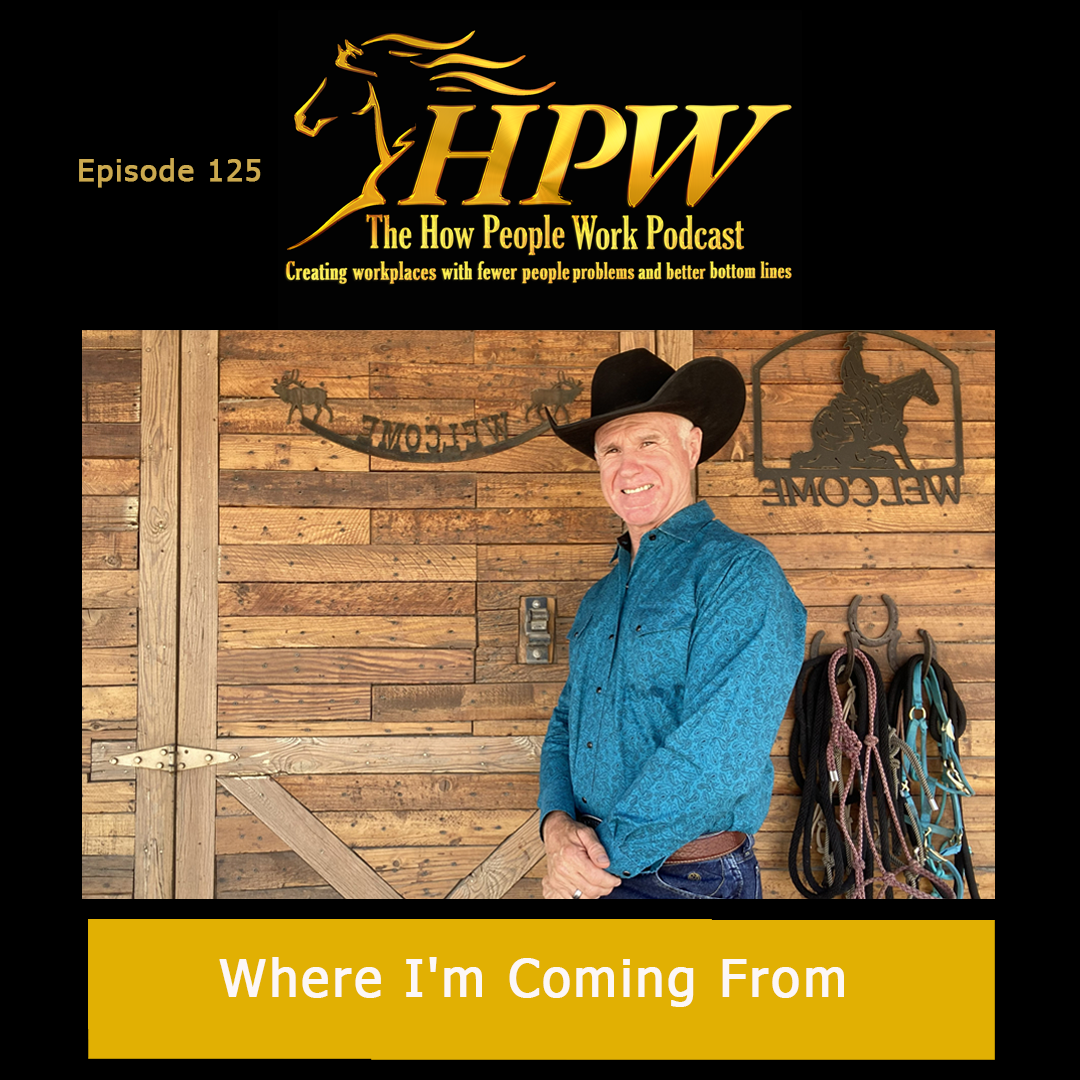
Listen to episode 125 of the How People Work Podcast to hear the whole story: prison, horses, decades of business frustration, and how it all led to Judge the Work. Protect the Person. If you want more, pick up my book, The One Horse Race. You can find it, along with more free resources, at shanejacob.com.

Ladies gentlemen, welcome to this episode of the How People Work Podcast. My name is Shane Jacob, and I thank you for taking your time to be here with me today.
Talking about today, well, talking about where I'm coming from, where it's happening, what it's all about, this podcast and the other resources that I have. Today I want to give you some context about where I'm coming from.
Not just this podcast, my weekly video, the book, The One Horse Race, my Speaking and Training, they're all based on my experience, and like you, I have a unique experience, and there's three parts of my experience that I want to talk a little bit about today and how they influence what I teach.
Part one is is prison. Now, part of my part of my experience includes spending some time in the hooscow, locked up in prison.
Now for a lot of decades I never talked about it. Mat matter of fact I pers purposely hid this back from the world.
And today I don't hide it because my experience in prison and the decisions that got me there and everything that happened during that period of my life is part of who I am and has helped me create the system to help people avoid not not avoid necessarily prison, but yes, that you will avoid prison, but that's not really the purpose. The purpose is is those lessons will help you become a better leader and having better experience just well in the workplace, a better workplace, less people problems, less people drama, more productivity because people are getting along better, and that begins with ourselves. So you know, I was in prison, by theway, just so you know, as a consequence of my drinking and driving.
And let me just tell you this about being in prison. People don't treat each other as equal in prison.
Okay. Just so you know, in my experience and my thoughts about how it all went, the people running those institutions and the people working in those general in those institutions, in my the way that I interpret what was happening, that I believe that they treated the treat the inmates as unequal human beings, as less than, as damaged, as second class, and as deficient, deviant, I mean it.
Poor treatment. That's for sure. I think that they do that on purpose.
I don't know. That's just my thoughts. And what was happening to me during that period of time in my life, at the root of why I was drinking, was a poor self-image.
That was at the root of what was going on with me. And I didn't I didn't know early on in my twenties that I could believe anything that I wanted to about myself. I didn't I didn't really know that I was trying to feel better about myself by drinking more.
My drinking ended up as a result of my drinking I ended up in prison and caused a lot of pain and suffering to a lot of people. Then being in prison and all of the all of the harm that I caused other people fed my own negative narrative about myself.
I was a convicted felon, the way I was treated, my own thoughts about my own behavior, all that fueled the belief that I was deficient as a human being. Okay?
So as in my early 20s, I flat ass believed that I was permanently and forever, you know, gonna be less than a second-class citizen and an insufficient person. And the thoughts that the cycle that followed that, those thoughts of course fueled negative feelings, and those negative feelings led to more and more negative actions and and more negative behavior, and then the behavior continued to feed the narrative for along time, and I stayed in this cycle because I was saying thinking I felt bad, because I felt bad I acted bad.
And let me just tell you something. Here's an important part of this puzzle, but I hope that you can see for yourself, because my thinking about me didn't only affect me. That's a big piece of this.
And I want you to know that your thinking about you, it's not all about you. I thought everything was all about me. The way that I thought about me was my own business and it had nothing to do with anything else.
I'm here to tell you my thinking negatively affected everyone that I influenced. My marriage at the time, my children, my family, my work, my relationships, everyone I came in contact with. Okay.
In this period of my life, significantly and significant had a significant influence on my thinking and basically got me to where I am now. So that is a snapshot, a quick summary of part one, which I'm calling my prison time experience. Part two that I want to talk about in relationship to where I'm coming to you from is that my experience with horses, and I have been I've I have a lot of experience with horses.
A lot, I've been in the horse industry for a long period of time, many decades. I've trained horses for thirty years, not as a full-time horse trainer, but I've trained professionally. I've been paid to train horses.
I'm in fact I currently am training horses as we speak, my own and for other people right now. I currently have a five-month-old weanling, little Philly that's bred to be a barrel horse that I'm training for a lady. I have five horses that my own that I started as weanlings or just barely started two year olds that I'm working on developing.
I'm also a farrier for that means that I do hoof care. I am I trim horses' hooves and trim and shoe horses, and I've done that for more than 30 years.
We board horses here at our facility in Las Vegas. I've shown horses. I've rode a lot of colts for horses and mules for other people.
I've trained wild Mustangs. I had a stallion and I bred and trained a lot of colts, bred some outside mares, meaning not my own mares.
I bred and improved and sold a lot of horses, and that was a significant part of my income for a long time was trading horses. And I've invested a lot in learning about horses for decades.
I've been to literally hundreds of clinics and spent thousands of hours in lessons with many different people I've read. That doesn't even include all the books and videos and studying. And I've been, but I've been in practice in it.
I mean, I live it. I'm in it all day, every day. I am in the horse business, man.
I that's what I do. And I continue to learn and practice.
I don't think I've got it all. I 'm still learning and I'm in the pursuit of horsemanship.
And it because horsemanship isn't something that you like accomplish and check off the list. If you ask me it's something that's that you look at look at it and say how good can I be at it today?
Something, it's a lifetime pursuit. You can call me a professional horseman, a trainer or a farrier, but I look at it as an ongoing process.
And what horses have taught me are a lot of things that relate to people. Number one is horses forgiveness, horses ability to forgive, and I relate all this to how people relate to each other. Confidence is a big thing.
What a horse's awareness of what we're feeling and how that they react to that, that's a big lesson in how people relate and react to each other. The fact that horses are always learning, they're they never stay the same. They're always either moving towards or moving away from your desired result, and that and because everything matters, okay, with horses.
Communication is another concept with horses that's big and important. And so that is, you know, being intentional and having clarity around how we communicate.
And one of the biggest lessons with horses and horse owners is our overall attitude towards horses. And what I mean is, and by the way, this is a fundamental key to my whole life's philosophy, my leadership and management philosophy, it's how I solve problems at work.
And and that is this. It's easy to blame the horse when we can't when horses don't do what we want. And it's the exact same in the workplace.
Okay, we can't we can't get the people that we manage and lead to do what we want to do. And in the horse business we look at the horse as a problem. We say, well, he won't do this, and it's all him, you know, and we we're focusing on the horse won't do this, and the problem is the horse.
And a lot of times we look at employees the as the same way. I did this for years. I'm like, what is wrong with these people?
What is wrong with this generation? Why can't they follow instructions? Why do they blah blah blah blah blah on and on?
Yes, they are contributing to the problem, but here's the thing, we don't look at the problem with the fact that we're contributing to the problem. Okay? And the question I have is what do we actually control?
Because with horses, their behavior, their thoughts and their behaviors are totally their decision. They're free agents and they are free, they they have their own free will to be able to decide their own decisions and their own behavior.
So how in the hell are we going to get them to do what they want if it's if we can't control them? You know, we can have consequences that we enforce, we can do with employees and with horses, but ultimately it is their decision on what they do or don't do. Okay.
And so the question becomes, well, how can I create desire in horses and people to be able to influence this person or this horse to make a different decision? Instead of, you know, they won't do what I want, they're the problem.
We turn the focus back to ourselves and what we can control, which is ourselves. Everything begins here because we can't control other people. What the hell else are we gonna do?
We have to look here. And if we start looking here to start with, instead of out there to them, there's the problem. That's the start place.
And unless you do this, you're not gonna go anywhere and be a great leader ever. The question is, is what can I do?
The driving question is what can I do in this situation to if influence a div a different decision? And this is the one of the biggest concepts and really the foundational concept that I want to share is is to is looking at ourselves, not blaming ourselves, not looking at ourselves as a way, as a method of empowering ourselves and changing the situation, because the key is here, it's not out there.
Part three of where I'm coming from in my experience in this, and I hope this is interesting to you and I think it gives me gives you perspective on where I'm coming from, and that is that I've had I've owned my own businesses. I've been ran my own show. I've been the boss, the leader, and the owner for several decades, over thirty years.
I started in business in nineteen ninety two in my own business. And for the for the vast majority of that time I've had employees since since I've started and within a few months of when I started, we'll say that. And for the vast majority of that time I have been frustrated with the people who worked for me.
I've been angry. I couldn't get the people to do what I wanted them to do. And I've I've had a lot of negative thoughts and frustration wrapped up in this.
And I just thought, you know, well, I don't understand this. I don't understand why this isn't working. It's like, what is wrong with these people?
And I constantly blame the people I hired for the negative results that I was getting. But what I wasn't applying during this period of time was what I learned from prison about judgment, from myself and other people, what I learned about from horses in creating trust, high trust relationships, how to create trust with people, with horses. I wasn't applying those ideas to my own workplace, to my own company, to my own people, to my own little teams inside of my companies.
And you know, and I also I learned a lot, a significant amount. One of the best investments in my time and money was becoming a certified life coach from the Brooke Castillo's life coach school. And I wasn't applying those lessons, you know.
My results, I was angry and frustrated and people that worked here knew that, and my results got slowly worse. They never got better.
But you know you can't know what you don't know. I was trying everything. I just didn't know what the solution was.
I was trying so many things. I was studying, I was reading books and doing everything I could do to come up with a solution to get better results for my people. It wasn't horrible.
It's just sometimes it was horrible. The turnover was high and was and things weren't going well, you know, for so long. I just I didn't I didn't like doing it.
Didn't like having employee sand and running this company because of the results that I was getting. Just I didn't I wasn't happy with them. And but you know, you don't know what's if you don't you don't know what you don't know, you can't know what you don't know.
And I don't remember the exact day when I came up with this whole idea of The Worth Work System. It was more of a wasn't a a lightning blow moment.
It was just all of these it was a it was all of my life experience that I put together over time is what happened. It just happened over time.
And as I discovered the pieces that became The Worth Work System, and I applied them to myself, I started seeing as I changed I s people miraculously the people around me changed. I don't know what the hell happened, but they all got easier to deal with. They all started caring more about their what the what they were doing at work.
But what really changed, what caused the change was me changing how I felt, how I thought and felt about me, and then how I felt and thought about the people who work for me. I changed my thoughts. That's what the key was.
And I changed how I interacted with them. You know, I and then I got different results.
And I get people start miraculously, like I said, people start to do more of what you want to do. They get engaged more, they participate more, they seemed like they care more about the results of the company. Productivity went up, the trust went up, and trust is part of psychological safety, and I want to talk just a little bit about psychological safety and the Separation Skill.
I believe that these changes are be based on the psychological safety that people feel. Now psychological safety according to me, my definition is that psychological safety is when people trust that they are safe from value judgment in the group, whatever the group is, your team, your company, your family, what ever group it is, that people in this group feel safe from value judgment. What is value judgment?
Value judgment means the kind of person you are, your worth, your value as a human being. What you do means what that means, your behavior, what your behavior means about you. Okay.
A value judgment is a negative value judgment, is basically saying that somebody bad behavior equals a badperson. Okay.
And so what we do as part of the Worth Work System is we s have what I call the Separation Skill, where we say your behavior and who you are are not the same. As a matter of fact, what you do or don't do has no effect and cannot have any effect on your worth as a human being. Okay, and we treat people with high regard regardless of what they do or don't do.
Now that's a belief system shift and it's a big deal. I just want to touch on it here today.
And so what does value judgment look like at work? You know, you see someone that makes a bad decision, you're like, he's an idiot, or you're lazy, or you're a bad decision maker. They're right there.
There's three easy ones. And all of this is totally normal and natural. It's the way that we're taught and conditioned, and it's part of our culture, the way that we're raised, to believe and to know that what people do equals who they are.
So you're an idiot, you're lazy, you're a bad decision maker. All of those are negative value judgments.
They mean something about the person that makes them less than or deficient, and we usually that's always based on what they did, what they do or don't do. And we're like I said, we're conditioned to think these thoughts.
And so what I'm talking about is completely opposite, I mean it's backwards from from normalized thinking. Okay.
And because it is such a big fundamental shift, and you know, we know we're gonna make mistakes, we normalize that. Sometimes we're gonna make negative value value judgments, and when we do, we repair, we apologize, we fix it, and we move on.
The next one is the basically we're gonna call it Value Equality. Okay, so I don't believe that people are equal in that what we do is not equal. Let me be very clear about our value and our worth as a human being is totally equal.
A hundred percent equal. I believe, and I recommend accepting and developing the belief that everyone is equal, that there are no bad people. That's right.
No bad people. Even with all the bad things that people do, no bad people. That what people do or don't do has no effect on their value, and that everybody has 100% worth, period.
End of story. And we let it work, and in the workplace and in the cultures that I promote, and here at my own company, and what I've learned is that we emphasize human value equality.
Okay, not work, everybody doesn't do everything the same. And we judge the work, but we always protect the person, meaning we protect their value and their worth.
Also in psychological safety, we talk about reducing the power gradient. And meaning, I think the power gradient means that they're saying that somebody has more authority in than others, and you try to make the authority all equal in the company, which I think is ridiculous. I think that what we should be doing in the company is not reducing the power gradient, but reducing and equalizing the value gradient, meaning that we promote the idea and we live and show that everybody in this group is a hundred percent equal regardless of your position or your responsibility or your authority or your job title or any of it, regardless of that we're a hundred percent equal as human beings, as value and worth.
And as people believe that they're on they're equal, as we normalize mistakes and some of the things that mistakes and errors and bad decisions, when we normalize that and we we realize that we're all in this together equally, that I'm a leader, but I'm exactly like you. I'm no I'm no more valuable, I'm not better, I'm no worse than you. We're all 100% equal in this company.
And what that actually is, as people believe that, as they begin to accept that it's true, but because of how you demonstrate it, that's when the trust shoots up. As the trust shoots up, that's when people start changing how they behave, and that's that's the miraculous part.
And what it actually looks like is that we we always give people respect and regard all the time. Okay? We hold people in high regard and we give people full respect at all times, regardless of what they do.
Period. Or don't do, it doesn't matter.
This doesn't mean, let's be clear, that we condone or agree with bad behavior. It doesn't mean we're soft, it doesn't mean we're weak, it doesn't mean we're accepting poor work. We always judge the work.
That's why we're there. It's important. What people do matters.
Okay, we have systems, we have rules, we have consequences for bad behavior, and we hold people to our high standards. People are responsible for what they do, but at the same time, we always protect the person. We judge that work, but we always protect the person.
We respect and regard people regardless of what they do or don't do. And that is the that's one of the fundamental philosophy. That's the fundamental philosophy of The Worth Work System.
And what happened when I changed what I thought about me, when I quit negatively judging me, and I separated what people do from who they are and I looked at people as equal, things got better in my company. They didn't get to be perfect. But things got a hell of a lot better.
Like I said, the trust shot up. And then the people that worked for me started promoting this idea with the new guys. My yard manager and the other people with seniority started spreading the idea of judge the work and protect the person themselves.
Then I wasn't the only one promoting it anymore. And as my managers got on board, it became easier. The trust increased even more.
And just let me tell you, things still aren't perfect. But I will tell you this.
Well, people are gonna be hard, okay? So don't expect people to suddenly become easily ever.
If they are, I don't have the key to that. They're not just gonna fall in line and do whatever the hell you want whenever you want all the time.
They have their own free will and they're going to make their own decisions. But the premise that I have that I keep coming back to, and that is, is this, the only thing that you can do is what you can do yourself. Okay?
You're not going to change somebody else's mind. And I think that this fact is just overlooked in leadership. I think that we set out to change other people instead of set out to change ourselves and then get to see the result of that through other people, because the more that we try to control and control and control and control, and let me tell you, I tried that for decades and had poor results.
The more that we try to control other people, the more it backfires. The more that we look at ourselves and change ourselves, the better results that I've had. Okay.
People are going to make their own decisions. And our job as leaders is to focus on ourselves so that that we influence people to make good decisions. And those decisions should drive the company forward and make a positive impact on the on the company.
When the when companies and people are, I mean, why are we there in the first place? I mean, the only reason that any of us show up at any company at any any morning, any day, is to improve the quality of our lives. So, and I mean, from the CEO to the person who just started sweeping the warehouse floor, okay, we're all there for the same reason, and that is to have a higher quality of life.
And the company exists only if it's profitable, and it only exists and it's only profitable if it improves the quality of other people's lives, somewhere for very long, right? Because if you're out to do no good, you're eventually you're probably not gonna work out. Your company's gonna fail.
And when I talk about influence, I just want to be clear about this. I'm not talking about other people manipulating people. I'm talking about influencing people to make good division decisions that will benefit the company, because if the company is successful, the people constitute the company.
And if the if the company thrives, the company is able to serve the people that its products serve, and then everybody who is operating the company has a higher quality of life. And so when leaders focus on themselves in order to influence the people who work for the company to make the decisions, as people in the company make better decisions, everyone's life improves. From the people that that the company makes the goods and services, goods and/or services for, to everybody who works in the company.
And leaders, we're responsible for the results in the company. So again, here I'm gonna bottom line it. How do we improve the results that we're responsible for as leaders?
Answer, we look at ourselves and we say what can I do with me, what can I do with me, we improve ourselves, we change our thinking, we change our thinking changes our feelings, and our feelings change how we present to the world, they change how our actions because we we act based on how we feel. And how we relate to ourselves is how we relate to the world.
And how we relate to the world influences how other people think and behave. Okay, so what changed with me is that what changed for me is is that I don't go to my people, you know, mad at them for being idiots.
I learned to always hold my people in high regard. Now, I'm not a hundred percent at it either, but I'm getting pretty good at it. I'm getting better.
And when I don't, I repair. I go back, I apologize, I try to make amends, I make a plan for next time, and it we always do our best at my company, z, all of all of my companies, to always protect the person. We judge the work and protect the person.
We give them full respect and full regard at all times. I hold them on an equal par with me. And I take judgment of them.
I do my best to take judgment of them as a human being out of the equation. Okay, we just judge the work and we always protect and even love the people. Okay.
When people trust that regardless of what they do or don't do, that they'll be safe from value judgment, it changes how they start showing up at work. It changes their behavior, and that's the thing. I mean, Project Aristotle, Google conducted their own research, they called it Project Aristotle, it was in twenty sixteen, I think, and they found that psychological safety was the most important factor in high performing teams.
That's what created high performance with psychological safety. It created lower lower lower turnover, substantially higher engagement, which means more participation, people are showing up, it increased productivity and performance. And that is what gives the results.
It's trust. Okay. It's trusting that that we feel safe in this environment.
That's not a softball, that's not a weak ball. This is hard decisions. To be able to treat people with equality take strength.
To see everybody is equal is different. This is a fundamental belief change where we don't make what people do mean anything about them.
We only judge the work. This is difficult, it takes inner strength, it takes discipline on our part as leaders, first of all, to change how we think about ourselves, and then to look at the world the same way, and then to watch the world reflect our thoughts.
And our feelings and our reality back to us is really it's quite amazing to see the results of what happens when trust goes up and people feel that they're safe from value judgment with you. And so this is where The Worth Work System comes from, and my resources, I'll tell you what they are, I got a bunch of free ones, but this is where The Worth Work System comes from.
Prison, what I learned about judgment and equality in prison, what believing that I was deficient did to my life and all the people around me. Part two was trust, excuse me, part two was horses where I learned about so much about trust, about forgiveness, communication, awareness awareness, and about looking at myself in order to get the result that I wanted. And three was in business, I of having decades of frustration trying to get people to do what I wanted and failing at trying harder and harder and harder.
Okay. And then finally applying the principles that I had learned in my lifetime, in my life experience, to myself, and then seeing the a different result in the workplace. Okay.
And this is the context that I'm giving you that's behind The Worth Work System, where we Judge the Work and Protect the Person. The bottom line, the bottom line for if you're a reader, is this. Start looking at yourself and changing yourself.
The key is within. You have the key. The key is within.
You are capable. And you have the answer.
It's already there. It's simply recognizing it.
You're not going to change what other people do. What you can do, you can enforce consequences, you can make more rules, you can get angry angry, you can ratchet up the pressure, you can create harder and harder and more and more tougher and tougher consequences. But until you change how you relate to the people and that they trust that and that and that the trust level is high, good the hell luck with getting people to be on your side, to be on your team, to line up with you, to fully participate, to fully be honest and truthful in in your company, okay, in my experience it's not happening until we start treating people with respect at all times, which and what I mean by that is always holding people in high regard, just common courtesy, kindness and respect.
I want to tell you about what I have available, and that is of course this podcast, if you're listening or watching now, podcast which is a free resource every week. We're up to something like a hundred and twenty-five.
We've been two years doing this podcast. It's a tremendous resource for learning how to be an exceptional leader.
We have The Self-Reliant Team, which is my free, which is a video series that will help you implement these ideas and transform, it's the application of The Worth Worth System, and it's only in like three to five minute pieces once a week. Once a week you get a three to five minute video.
So we have the Self-Reliant Team. Well, podcast one, Self-Reliant Team two.
Then we have we have my book The One-Horse Race, which is which is my life story combined with well how I used the premise of the book, and the premise of the book is how to create the beliefs that you need to have the life you want. You can believe whatever you want, and in order to get what you want, you must believe, you must have certain beliefs. And this is a fundamental, this is belief system change.
Okay, that's what I talk about in the book. And I use my story as how to defy the odds because I have in so many ways. I highly recommend The One-Horse Race.
It's an excellent book. So we have that.
I have my keynote, which is I speak, I'm speaking more and more all in different locations all over the place at universities. I'm speaking at UNLV coming up soon and companies and associations and organizations. My keynote is called Judge the Work Protect the Person.
I also have leadership training where I work with companies in implementing The Worth Work System inside companies, inside leadership teams, and I have different levels of training. One is you know as intensive as a 12-month program down to a you know a two-hour workshop.
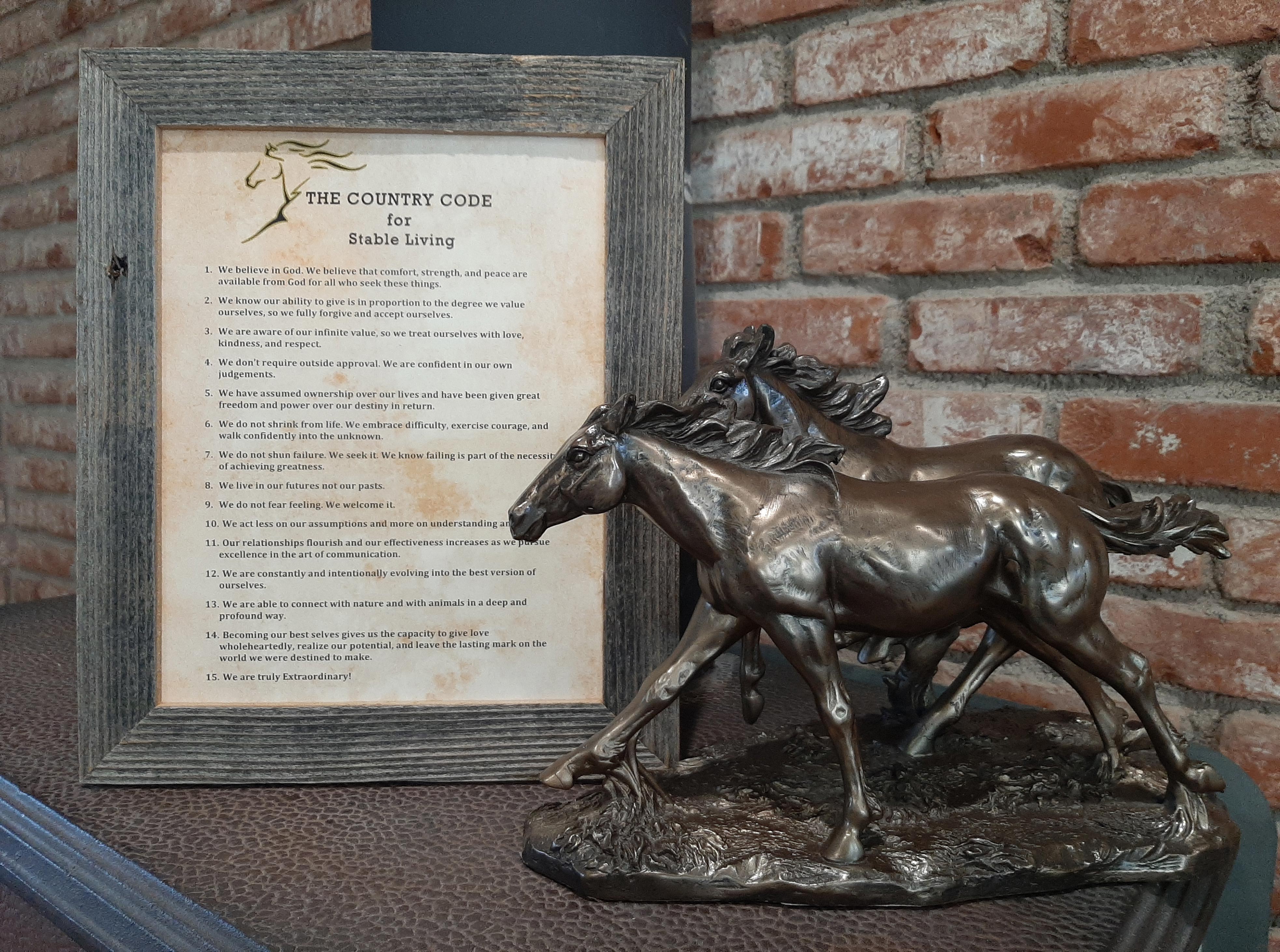
Also at the onehorserace.com where the book information is, you can also get a free Declaration of Significance which is awesome, you can also get I and I also have a free Country Code for Stable Living, and here's the thing, I can help you get where you want to be with a shorter, easier path than doing it on your own. And I know because I've tried so many systems, so many ideas. I've literally read at this point in the hundreds of not in the tens, I'm in the hundreds of leadership and personal development books, and I've tried a lot of systems and ideas, and I was really trying to do things right and make it happen for so long and trying to win and trying to get ahead and getting more and more frustrated as I went for so long.
I can help you avoid so many of the things that happen in business that happen as as a leader. The whole learning curve I can take it and shorten it so that you can have less frustrations.
I've just made so many bad decisions over so long that I know what works and what doesn't work. Okay? I know a lot of it.
I don't know everything. You don't have to go through the things that I went through.
You don't have to have that amount of frustration for so long. And you can begin getting the kind of results that took me decades to get with you know fraction of the time, and that's why I do what I do.
And let me tell you this, just to close with, that's where I'm coming from. Tons lots of free resources, paid resources also. You can find out more at shanejacob.com.
Check us out on media, on all our media pages. Find me on LinkedIn, Shane Jacob.
But I will ask you this, regardless, if you do nothing else, if you don't take advantage of any other thing that I have available after right now, I'm going to ask you to do this one thing, and that is this. If you will remember that regardless of what you do or don't do, and regardless of what has been done to you, nothing, and I mean nothing, can change your perfect value. Your value is non-negotiable.
Thanks for being with me. Stay with me.


You deserve it. And you can!
Sign up for weekly tools to communicate better, connect deeper, and create more trust and love in every relationship.
Your guide to understanding yourself and the people you love on a whole new level.
Sign up here:

.png)